- info@selfchec.org
Powered by Google  Translate
TranslateBe Sun Safe

Don’t Use Tanning Beds
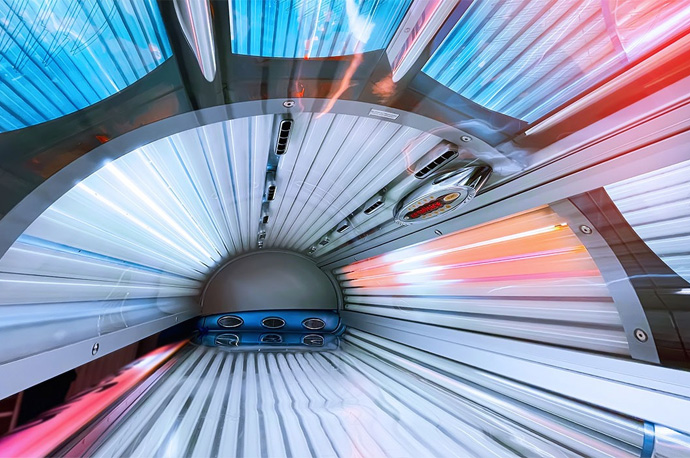
No matter what tanning parlor claim, tanning beds are not “safer than the sun,” and the younger you are when you start using them, the greater your skin cancer risk. The harmful effects of UltraViolet light are cumulative.
The World Health Organization classifies indoor tanning devices as carcinogens (causing cancer). Research estimates that, in the US, more than 400,000 cases of skin cancer, from basal cell carcinoma to melanoma (two types of skin cancer), may be related to indoor tanning.
The Best Sunscreen Protection
About Sunscreens
The Environmental Working Group (EWG) publishes a guide to brands that meet their criteria for safe products. Remember, even the best product needs to be reapplied if you’re outdoors for more than two hours, or if you spend time in the water.
Regular window glass will filter out most UVB rays, the shorter ultraviolet rays responsible for tanning and burning (and most skin cancer). But regular glass allows longer UVA rays to get through, the ones that damage skin and cause aging and wrinkling.
A car windshield is specially treated to deflect both kinds of ultraviolet rays, but anyone sitting next to side or back windows, or in a sunroom, should wear sunscreen.
40 percent of UV rays still get through on cloudy days, so sun protection is needed even then.
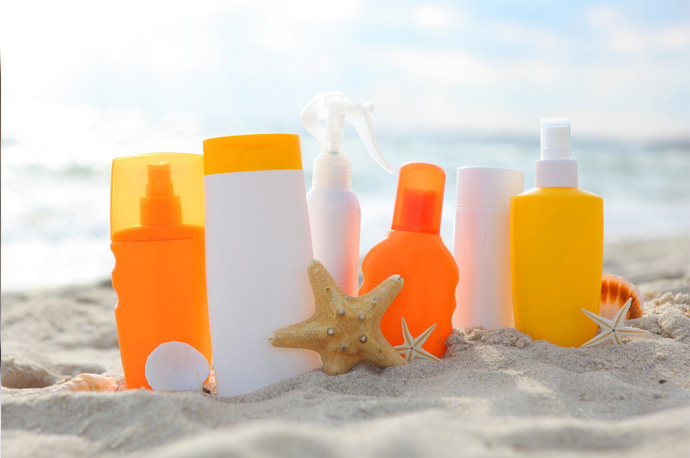
The Best Sunscreen Ingredients
The Idea Behind Sunscreens Is To Put A Shield Between Your Skin And The Sun
Some formulas contain chemicals that absorb rays while cause allergies. Better sunscreens combine several active chemical and physical sunscreen ingredients to give you broad-spectrum protection.
The Environmental Working Group (EWG), a watchdog agency, is helpful in determining which sunscreen ingredients may not be safe.
A Heads-up About Application Of Sunscreen
- Don’t Use Aerosol Sprays. Though easy to apply, they may pose fire hazards and health risks from unintended inhalation. The FDA (U.S. Food and Drug Administration) is looking at both their effectiveness and their safety.
What SPF And Broad Spectrum Mean
The Sun Protection Factor(SPF) is a guideline that tells you how long a sunscreen should protect you from the sun’s rays. A product with SPF 15 is the minimum you should use.
The more fair-skinned you are, the more easily you’re likely to burn—for some, that’s after just 5 minutes, so a higher SPF, like 30 or 50, is a better choice to use. It’s also a must for anyone planning on being outside for an extended period of time.
Here Are The Actual Numbers
- SPF 15 blocks 94% of the sun’s rays.
- SPF 30 blocks 97%.
- SPF 50 blocks 98%.
- Be aware that the false sense of security with a higher SPF may lead to overdoing exposure, and getting a burn.
How Much Sunscreen To Apply/Reapply
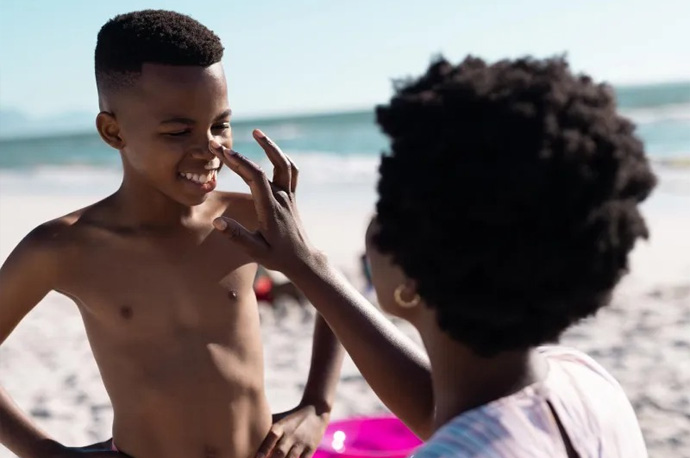
The ideal amount of protection involves applying one full ounce (the volume of a shot glass) over your entire body. Note that rays can penetrate some regular clothing, so apply all over–before you get into your swimsuit. Chemical sunscreens need to be applied 30 minutes before sun exposure to allow the ingredients to fully penetrate the skin.
When To Reapply Sunscreen
Reapplying sunscreen is as important as putting it on in the first place. Reapply that full ounce of product every two hours as well as immediately after swimming, toweling off or sweating a great deal.
The Skin Cancer Foundation points out that for a full day at the beach, you’ll need to allot about half of an 8-ounce bottle of sunscreen for each person.
Sunscreens may be labeled “water-resistant,” in which case the product must specify whether testing showed it lasts for 40 or 80 minutes of swimming or sweating.
The Best Sunglasses To Wear
Your best defense against eyelid cancer (and other eye damage) is to wear sunglasses with lenses that block UV rays and to wear them year-round, even on overcast days.
Select From Sunglasses That Offer These Lens Features
- Lenses that absorb and block 99 to 100 percent of UVA and UVB light and, if possible, protect against high-energy visible (HEV) light, high-frequency light in the violet/blue band and a cause of age-related macular degeneration.
- Lenses big enough to shield your eyes, eyelids and surrounding skin. Look for wraparound styles with a close fit and UV-protective side shields.
- Lenses that meet ANSI and/or ISO standards for recognizing the colors on traffic signals when you are driving and are impact-resistant.
- Polarized lenses, that eliminate glare when used while driving, in the snow and on the water.

What You Wear Can Help Protect You From The Sun

Regular clothing can offer some protection from rays, and the more skin you cover, the better. Think long pants and long-sleeved shirts with a high neckline or collar to protect the back of the neck and a hat with a 3” or wider brim all around to block up to half of all UVB rays from eyes and eyelids.
UPF:
Clothing’s Sun Protection Indicator
You can greatly improve the degree of protection with clothes specifically designed for sun protection. Look for clothing branded with a UPF or Ultraviolet Protection Factor number, which lets you know what fraction of the sun’s ultraviolet rays can penetrate the fabric.
For example, clothing with UPF 50 lets in just 1/50th of the sun’s UV radiation.
You May Already Have Sun Safe Clothing In Your Closet
Clothing you already have in your closet may offer UV protection for work and everyday wear. Remember that the sun in winter, especially during winter sports, can give a sunburn just as much as summer sports, so the heavy fabrics mentioned below are useful for cooler weather.
- Tightly woven or closely knitted fabrics with smaller holes between the threads, like denim and wool
- Synthetic fabrics such as polyester and rayon
- Heavier, denser fabrics such as corduroy and velvet
- Glossy fabrics that deflect rays
Love the feel of natural cotton? The skin cancer Foundation suggests washing new cotton and cotton blend clothes two or three times before wearing to purposely shrink the spaces between the fibers, effectively raising their UPF, the rating system that measures the UV protection provided by fabric.
UPF is very similar to the SPF rating system used for sunscreens.
Protect Yourself In A Car
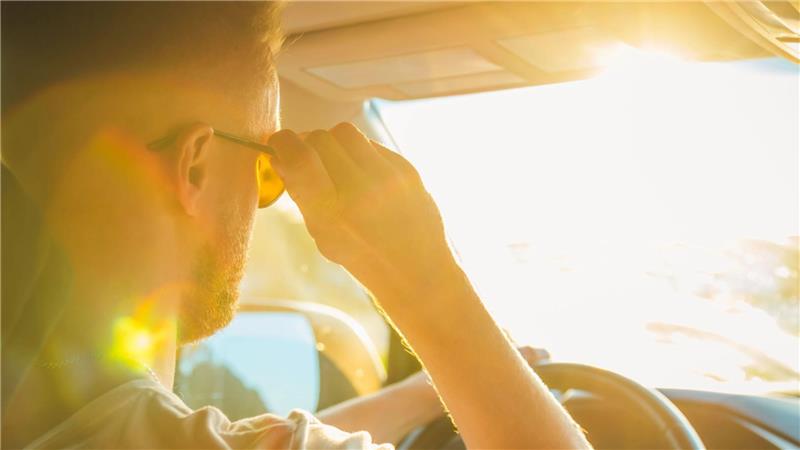
A study published in the Journal of the American Academy of Dermatology found that nearly 53 percent of skin cancers in the US occur on the left—the driver’s—side of the body, meaning they could be related to UV exposure when you’re in your car.
In addition to applying sunscreen, follow these sun protection steps:
- Cover your head and neck.
- Avoid riding/driving in a convertible with the top off or with an open sunroof; close the sunroof shield during daytime driving.
- Avoid resting your arm on an open window, whether you’re the driver or a passenger.
5 Ways To Keep The Kids In Your Life Sun Safe
- Keep babies up to 6 months out of the sun. Their skin is too sensitive for either sun or sunscreen. They need to be in the shade.
- Cover their head and face with a wide-brimmed hat and long sleeves.
- Limit the time they are in the sun, especially between 10am and 4pm.
- Make sure older kids apply sunscreen.
- Give everyone’s skin a visual once over.
Children who get sunburned are at more risk of getting melanoma when they are older

Resource: Mayo Clinic, FDA, American Academy of Dermatology, American Academy of Ophthalmology, The Skin Cancer Foundation, The Cleveland Clinic
Frequently Asked Questions
Quite simply, most skin cancers would be prevented. Click questions below for more answers.
Tanning beds are cancer machines. Here’s why… Read more
Check this guide to sunscreens, moisturizers and aftershaves. Read more
These ingredients put a shield between you and the sun. Others don’t. Read more
Learn to decode the jargon and the numbers. Read more
Read why it can be as much as half of an 8-ounce bottle. Read more
The right sunglasses can block almost all the dangerous rays that cause eye damage. Read more
Specially treated clothing can offer protection from UV rays. Read more
You may already have protective clothing in your closet. Check out 4 things to look for when you shop. Read more
These three things will keep you sun safe… Read more
Here are five suggestions… Read more
What Self Chec Is Saying To You
If you've been too busy, overwhelmed, exhausted or simply convinced that you can get to it later, you need to know that "later" is the most dangerous word in healthcare.

Not Someday, Not Later, Now.
Sign Up To Be Reminded
.png)